
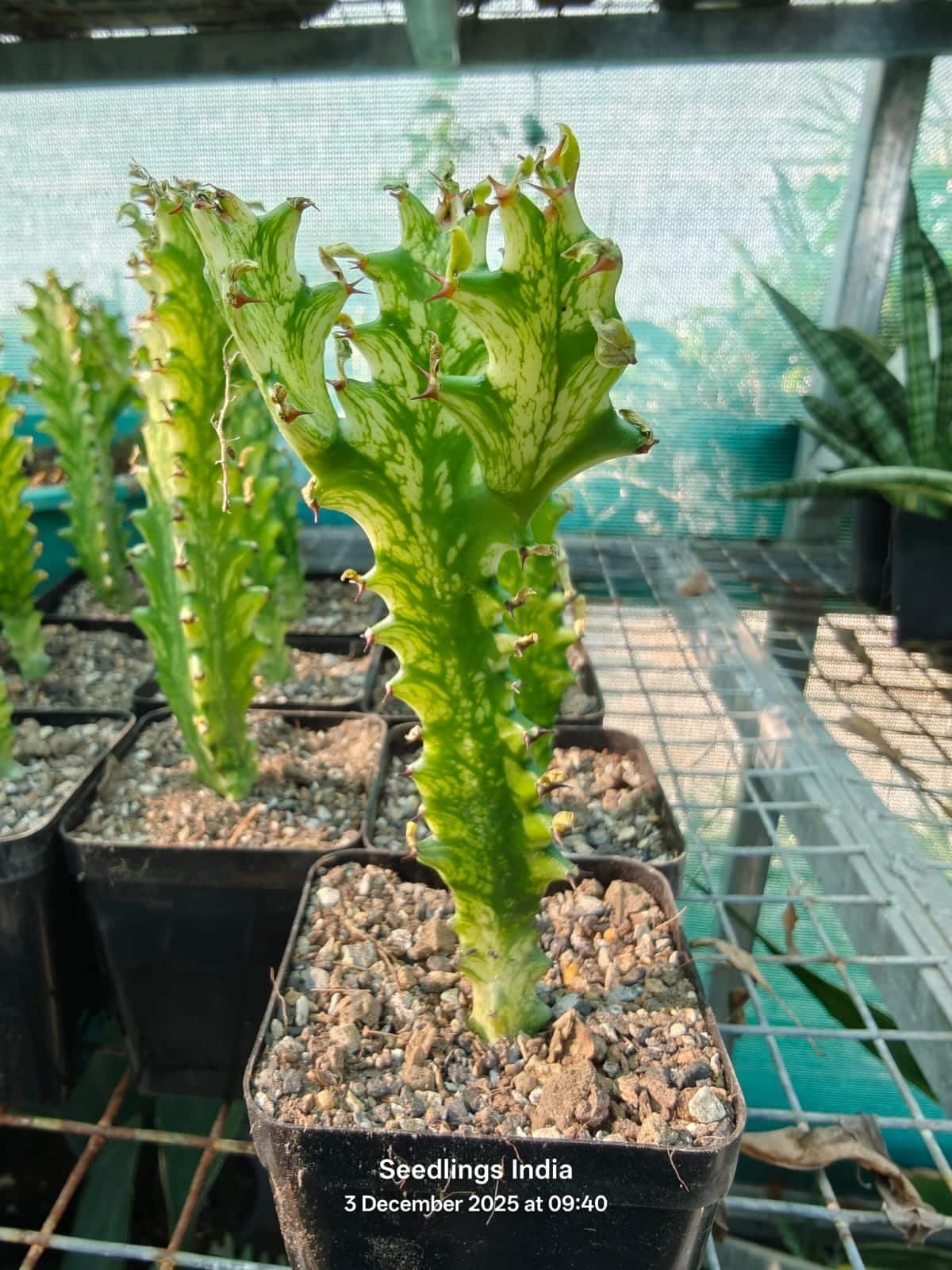
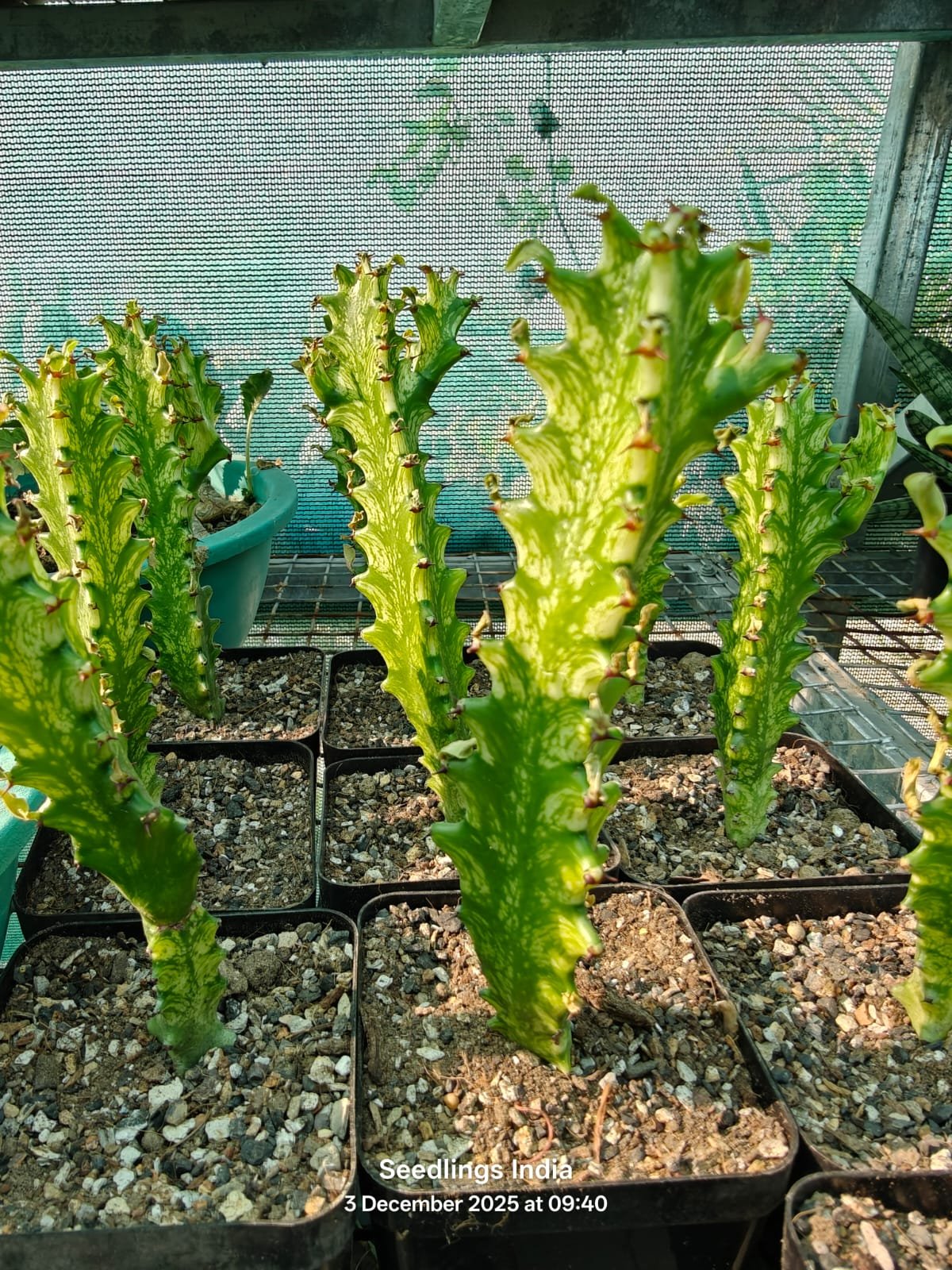
Euphorbia Lactae Variegated
Euphorbia lactea variegata, also known as the Variegated Coral Cactus, is a striking succulent plant characterized by its angular, candelabra-like stems that are marbled in creamy white and green. It has a sculptural and architectural presence, suitable for bright indirect or filtered sunlight. This plant is drought-tolerant, prefers well-draining succulent or cactus soil, and should be watered sparingly, allowing the soil to dry out between watering. It grows slowly, typically reaching up to 1.5 meters indoors. The Euphorbia Lactae Variegated sap is toxic and can cause skin irritation, so caution is advised around pets and children. The variegation results from a mutation, giving it a pale, ghostly appearance. Euphorbia Lactae Variegated produces small, inconspicuous flowers that attract pollinators like bees and butterflies. Overall, it is a unique and low-maintenance succulent ideal for indoor decoration with a preference for dry, well-lit environments.
Euphorbia lactea variegata (White Ghost / variegated Euphorbia) is essentially a drought‑tolerant succulent that wants strong light, fast‑draining soil, and very careful watering.
Light and placement for Euphorbia lactea variegata
-
Give bright light: several hours of bright indirect light, or very soft direct morning/evening sun; harsh midday sun can scorch the pale variegated tissue, especially in Indian summers.
-
Indoors, place near the brightest window; outdoors, give filtered sun or a spot with light shade in the afternoon.
Watering of Euphorbia lactea variegata
-
Let the mix dry completely between waterings; underwatering is safer than overwatering for this plant.
-
In the growing season (roughly spring–early autumn), water thoroughly, then drain fully; in winter, water very sparingly, just enough to keep stems from shrivelling.
Soil, pot and feeding for Euphorbia Lactae Variegated
-
Use a cactus/succulent mix with added pumice, grit or perlite so water runs through quickly; always use a pot with drainage holes.
-
Feed lightly with a weak, balanced succulent fertilizer during the growing season once a month or less; no fertilizer in winter dormancy.
Temperature, pests and safety for Euphorbia Lactae Variegated
-
Keep in warm conditions; it dislikes cold and should be protected when temperatures drop below about 10–13 °C (50–55 °F).
-
Watch for mealybugs and other sap‑suckers; treat early with insecticidal soap or neem and keep air circulation good to avoid rot.
-
Wear gloves: the plant has thorns, and the white latex sap can irritate skin, eyes, and is toxic if ingested, so keep away from pets and children.
Reviews
There are no reviews yet.